
Venice is one of those rare destinations that feels almost too extraordinary to be real. Built upon the waters of a shimmering lagoon, the city unfolds through winding canals, graceful bridges, magnificent palaces, and narrow passageways that invite you to wander without a map. Yet beyond celebrated landmarks such as St. Mark’s Basilica and the Doge’s Palace lies another Venice—one of hidden courtyards, traditional boatyards, family-run restaurants, peaceful neighborhoods, and customs shaped by centuries of life on the water. These seven experiences will take you through the history, beauty, flavors, and quieter corners that make Venice so unforgettable.
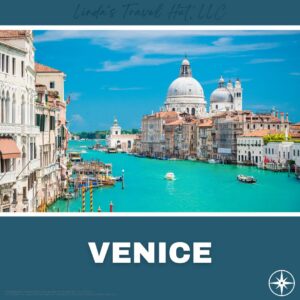
🇮🇹 7 Days of Venice | Day 1: Welcome to Venice
Welcome to Venice—a city unlike anywhere else in the world.
Built across more than 100 small islands in the Venetian Lagoon, Venice appears to rise directly from the water. There are no cars in its historic center. Instead, gondolas glide beneath centuries-old bridges, water taxis travel along the Grand Canal, and vaporetti carry residents and visitors between neighborhoods and islands.
For centuries, Venice was the heart of a powerful maritime republic. Its merchants brought spices, silk, precious stones, and artistic influences from across the Mediterranean and beyond. That history can still be seen in the city’s grand palaces, Byzantine mosaics, Gothic architecture, and richly decorated churches.
Yet Venice’s magic is found in more than its famous landmarks. It waits along quiet canals, beneath weathered archways, and inside tiny bacari where locals gather for cicchetti and a glass of wine. It is in the sound of footsteps echoing through a narrow passageway, laundry fluttering above a secluded courtyard, and golden light reflecting from the water at the end of the day.
Venice is meant to be explored slowly. Put away the map for a little while, cross whichever bridge catches your eye, and allow yourself to get lost. In Venice, taking a wrong turn often leads to the most memorable discovery.
Linda’s Travel Tip: Spend at least one evening in Venice rather than visiting only as a day trip. Once many daytime visitors have departed, the city becomes quieter, more atmospheric, and wonderfully romantic.
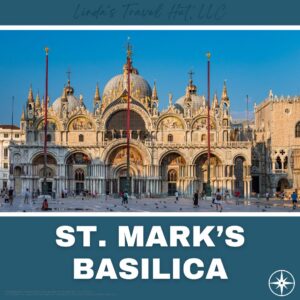
🇮🇹 7 Days of Venice | Day 2: St. Mark’s Basilica
Standing at the heart of Piazza San Marco, St. Mark’s Basilica is one of Venice’s most magnificent landmarks—a dazzling blend of Byzantine architecture, golden mosaics, and treasures gathered during the city’s centuries as a powerful maritime republic.
The present basilica was begun in the 11th century to house the relics of Saint Mark the Evangelist, which Venetian merchants had brought from Alexandria. The winged lion, the symbol traditionally associated with Saint Mark, became the emblem of Venice and can still be seen throughout the city.
Step inside and look upward. Thousands of square feet of shimmering mosaics cover the domes, arches, and vaults, earning the basilica its nickname, the “Church of Gold.” As sunlight moves through the interior, the tiny pieces of gold glass create an atmosphere that feels almost otherworldly.
Among the basilica’s greatest treasures is the Pala d’Oro, an elaborate golden altarpiece decorated with enamel panels, pearls, and precious stones. The basilica’s museum also houses the original four bronze horses that once stood above the entrance. The horses seen outside today are replicas, protecting the ancient originals from weather and pollution.
For centuries, St. Mark’s was not Venice’s cathedral but the private chapel of the doge, the elected leader of the Venetian Republic. Its extraordinary decoration reflected not only religious devotion but also the immense wealth and influence of Venice.
Linda’s Travel Tip: Don’t simply walk through the main level and leave. Include the museum and upper terrace for a closer look at the mosaics, the original bronze horses, and a beautiful view across Piazza San Marco. Remember that this is an active place of worship, so modest clothing is required.

🇮🇹 7 Days of Venice | Day 3: The Doge’s Palace and Bridge of Sighs
With its delicate pink-and-white marble façade, graceful arches, and Gothic details, the Doge’s Palace appears almost too elegant to have once been the center of one of Europe’s most powerful governments.
For centuries, this extraordinary palace served as the residence of the doge—the elected leader of the Venetian Republic—as well as the headquarters of its government and courts. Behind its ornate exterior, important decisions were made, foreign ambassadors were received, and the vast maritime empire of Venice was governed.
Inside, visitors move through grand staircases, gilded chambers, and monumental council rooms decorated by celebrated Venetian artists. One of the most impressive spaces is the Great Council Chamber, where hundreds of members of the Venetian nobility gathered beneath Tintoretto’s enormous painting Paradise.
But the palace also reveals a darker side of Venetian history.
Hidden behind its ceremonial rooms are narrow passageways, interrogation chambers, and prison cells. The palace prisons once held the legendary adventurer Giacomo Casanova, who famously escaped through the roof in 1756.
Connecting the palace to the newer prison is the enclosed Bridge of Sighs. According to romantic tradition, condemned prisoners sighed as they caught their final glimpse of Venice through the bridge’s small stone windows. The name was later popularized by the poet Lord Byron, adding another layer of mystery to one of Venice’s most photographed landmarks.
Linda’s Travel Tip: Most travelers photograph the Bridge of Sighs from outside, but visiting the Doge’s Palace allows you to walk through the bridge itself. Pause at its small windows to see the same view of the canal that inspired its famous legend.

🇮🇹 7 Days of Venice | Day 4: Scala Contarini del Bovolo
Hidden within a quiet courtyard between Piazza San Marco and the Rialto Bridge is one of Venice’s most distinctive architectural treasures: the Scala Contarini del Bovolo.
The external spiral staircase was added to Palazzo Contarini near the end of the 15th century. Its unusual design combines Renaissance arches, Gothic details, and Venetian-Byzantine influences, creating something unlike any other staircase in the city.
The word bovolo means “snail shell” in the Venetian dialect—a fitting name for the staircase as it coils gracefully around the outside of the tower.
The Contarini family commissioned this remarkable addition as a visible symbol of their wealth and status. In a city filled with impressive palaces, the dramatic staircase ensured that their residence would stand apart. Over time, the family became so closely associated with it that they were known as the Contarini “del Bovolo.”
Climb the winding staircase through a series of open loggias, and the views become more beautiful with every level. At the top, the Belvedere offers a rooftop panorama filled with terracotta tiles, church domes, bell towers, and the unmistakable silhouette of St. Mark’s Campanile.
Unlike Venice’s grandest attractions, the Scala Contarini del Bovolo feels like a secret—one discovered by stepping away from the busiest streets and following a narrow passageway into an unexpected courtyard.
Linda’s Travel Tip: The entrance can be surprisingly easy to miss, so watch carefully for the signs near Campo Manin. The staircase has numerous steps and no elevator to the viewing terrace, but the rooftop perspective makes the climb worthwhile.
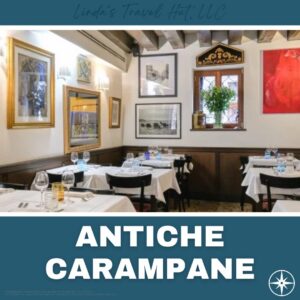
🇮🇹 7 Days of Venice | Day 5: Antiche Carampane
Hidden among the narrow lanes and tiny squares of San Polo, Antiche Carampane is the kind of restaurant many travelers hope to discover in Venice: intimate, family-run, and deeply connected to the city’s culinary traditions.
The Bortoluzzi family took over the small neighborhood osteria in 1983. Their connection to Venetian seafood runs even deeper—the father of founder Giovanni Battista “Nani” Bortoluzzi worked as a fish wholesaler at the nearby Rialto Market.
That relationship with the market still shapes the menu today. Dishes change according to the season and the fresh seafood available each day, allowing the ingredients of the Venetian Lagoon to take center stage.
Traditional specialties may include sarde in saor—sardines marinated with onions—creamy baccalà mantecato, tagliolini with spider crab, cuttlefish in its own ink with soft polenta, or a beautifully prepared mixed seafood fry. When available, soft-shell crabs from the lagoon are an especially prized seasonal treat.
The dining room is small and lively, with the warmth of a neighborhood restaurant rather than the formality of a grand dining room. Venetian residents dine alongside visitors who have deliberately sought out the restaurant, creating an experience that feels authentic, welcoming, and unmistakably local.
Finding Antiche Carampane is part of the adventure. The restaurant is tucked away from Venice’s busiest routes, in a maze of passageways where even confident travelers may wonder if they have taken a wrong turn.
Linda’s Travel Tip: Reservations are strongly recommended because the restaurant is small and extremely popular. Allow extra time to find it, and ask about the day’s fresh seafood and seasonal specialties before ordering.
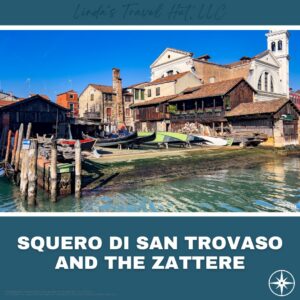
🇮🇹 7 Days of Venice | Day 6: Squero di San Trovaso and the Zattere
Away from the grand palaces and busy lanes surrounding Piazza San Marco, the Dorsoduro district reveals a quieter side of Venice—one shaped by traditional craftsmanship and everyday life along the water.
Tucked beside a narrow canal, the Squero di San Trovaso is one of Venice’s oldest surviving gondola boatyards. The word squero refers to a place where Venice’s traditional wooden boats are built, maintained, and repaired.
The boatyard dates to the 17th century and looks surprisingly different from the stone buildings surrounding it. Its timber construction and sloping roof resemble an Alpine home, reflecting the origins of the craftspeople and the mountain forests that once supplied wood for Venetian boats.
From across the canal, visitors may catch a glimpse of artisans working on gondolas—repairing their sleek black hulls, restoring decorative details, or preparing them to return to Venice’s waterways. It is a wonderful reminder that the gondola is more than a symbol or tourist experience; it is part of a living craft passed down through generations.
Continue toward the Zattere, a broad waterfront promenade stretching along the Giudecca Canal. Its name comes from the wooden rafts, or zattere, that once arrived here carrying timber from the mountains.
Today, the Zattere is perfect for a leisurely walk beside the water. The promenade offers open views across to the island of Giudecca, inviting cafés, beautiful churches, and plenty of places to pause as boats pass through the canal.
Linda’s Travel Tip: The Squero di San Trovaso is an active workshop, so it is best viewed respectfully from across the canal. Afterward, stroll along the Zattere in the late afternoon, when the waterfront becomes especially beautiful in the warm Venetian light.

🇮🇹 7 Days of Venice | Day 7: Cannaregio
Beyond Venice’s most crowded landmarks lies Cannaregio, a neighborhood where peaceful canals, historic churches, local restaurants, and everyday Venetian life come together.
Located in the northern part of the city, Cannaregio is one of Venice’s largest and most populated districts. The busy Strada Nova carries travelers toward the Rialto Bridge, but wander only a few streets away and the atmosphere changes. Narrow passageways open onto quiet canals, laundry hangs above hidden courtyards, and residents stop to talk along the waterfront.
Cannaregio is also home to the historic Venetian Ghetto, established in 1516 as an area where the city’s Jewish residents were required to live. Despite severe restrictions, the community created a thriving center of faith, culture, and commerce. Synagogues were ingeniously built into the upper floors of existing buildings, and unusually tall residences reflect the need to accommodate a growing population within a confined space.
Elsewhere in the neighborhood, the Church of Madonna dell’Orto contains remarkable paintings by Tintoretto, who lived nearby and was later buried inside the church.
As evening approaches, the canals along Fondamenta della Misericordia and Fondamenta degli Ormesini become some of the neighborhood’s most inviting gathering places. Traditional bacari serve cicchetti and wine, while waterfront tables create a relaxed setting for dinner or aperitivo.
Cannaregio offers something increasingly precious in Venice: the opportunity to experience the city not simply as a collection of famous landmarks, but as a living neighborhood.
Linda’s Travel Tip: Visit Cannaregio during the day to appreciate its history and quieter streets, then return—or stay—into the evening when the canals come alive with local dining and conversation. When visiting the Jewish Ghetto, remember that it remains an important cultural and religious community and should be explored respectfully.
Venice reveals itself most beautifully when you look beyond the postcard views and allow time for its quieter details. From the golden mosaics of St. Mark’s Basilica and the grandeur of the Doge’s Palace to hidden staircases, traditional gondola workshops, authentic Venetian flavors, and the neighborhood canals of Cannaregio, every experience adds another layer to the city’s remarkable story. Venice is not simply a place to see—it is a place to wander, savor, and feel. When you’re ready to experience the floating city for yourself, Linda’s Travel Hut can create a thoughtfully planned Italian journey that brings together its iconic treasures and unforgettable hidden corners.
